
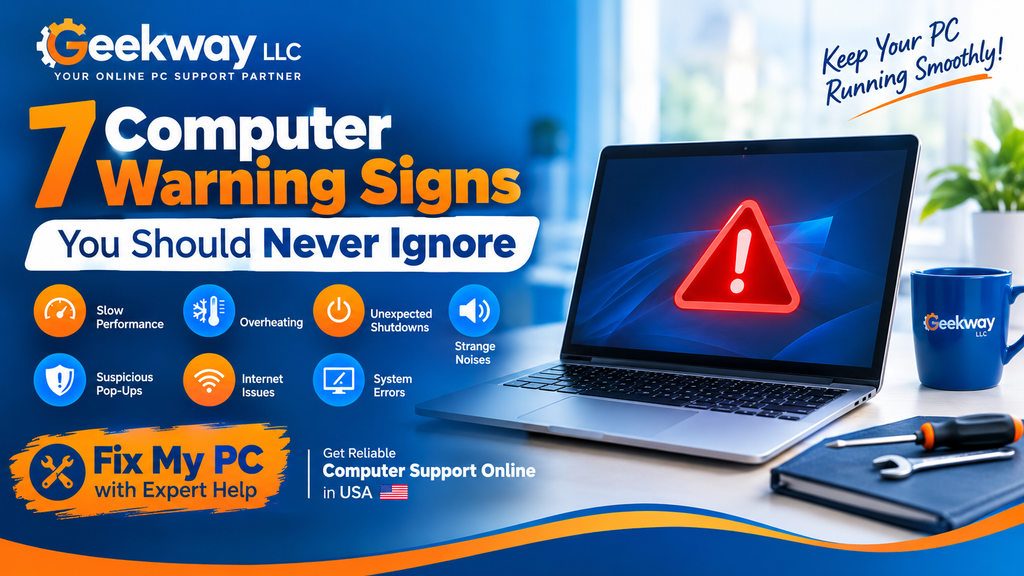
Computers have become an essential part of everyday life, helping people work, study, communicate, and manage important tasks. However, like any electronic device, computers can develop problems over time. Ignoring early warning signs may lead to reduced performance, unexpected shutdowns, data loss, or other frustrating issues.
Recognizing these symptoms early can help you take appropriate action before a minor issue becomes a bigger problem. Whether you use a computer for work, education, or personal activities, understanding when to seek computer support online in USA can help you keep your device running smoothly.
In this guide, we will explore seven common computer warning signs you should never ignore, explain their possible causes, and discuss when it may be time to fix my PC with professional assistance.
1. Your Computer Is Suddenly Running Slowly
A computer that once worked quickly but now takes several minutes to start or open applications may be showing an early warning sign.
Several factors can contribute to slow performance, including too many startup applications, insufficient storage space, outdated software, background processes, or potentially unwanted programs.
What You Can Do
- Close applications you are not currently using.
- Check available storage space and remove unnecessary files.
- Review startup applications and disable unnecessary ones.
- Install available operating system and software updates.
- Consider online computer troubleshooting if the slowdown continues.
If your computer remains unusually slow despite these steps, professional PC performance assistance may help identify the underlying cause.
2. Frequent Freezing or Unexpected Shutdowns
Does your computer freeze while browsing the internet, working on documents, or running applications? Does it restart without warning?
These symptoms can indicate software conflicts, overheating, memory problems, power supply issues, or failing hardware.
Repeated shutdowns should not be ignored, especially when they occur during ordinary tasks.
How to Respond
- Save your work frequently.
- Check whether the computer’s ventilation openings are blocked.
- Install legitimate software and system updates.
- Note any error messages that appear before a shutdown.
- Seek computer support online in USA if freezing or restarting becomes frequent.
Avoid repeatedly forcing the computer to shut down unless necessary, as this can result in unsaved work being lost or file corruption.
3. Unusual Noises Coming From Your Computer
A desktop computer or laptop may produce some normal fan noise. However, new clicking, grinding, buzzing, or unusually loud fan sounds can indicate a problem.
Possible causes include dust buildup, a worn cooling fan, or a mechanical issue with a traditional hard disk drive.
What You Should Do
- Check whether the noise comes from the fan, speakers, or storage drive.
- Keep ventilation areas clear of dust and obstructions.
- Back up important files if you suspect a storage drive problem.
- Stop using the device if you notice severe grinding or other signs of hardware failure.
If your hard drive is making repeated clicking sounds, avoid unnecessary restarts or repair attempts. A professional assessment may help reduce the risk of further data loss.
4. Your Computer Is Overheating
Computers generate heat during normal operation, but excessive heat can affect performance and damage components over time.
Common warning signs include unusually hot surfaces, loud fans, sudden shutdowns, or performance slowdowns during demanding tasks.
Overheating may result from blocked air vents, dust accumulation, malfunctioning fans, or demanding background processes.
Ways to Reduce Overheating
- Place your laptop on a hard, flat surface.
- Keep air vents clear.
- Avoid using the computer on blankets or pillows.
- Close unnecessary resource-intensive applications.
- Seek computer troubleshooting online if overheating continues.
If your computer becomes extremely hot, emits a burning smell, or shows signs of battery swelling, turn it off if safe to do so and discontinue use until it has been assessed.
5. Frequent Pop-Ups and Suspicious Messages
Unexpected pop-ups, unfamiliar browser redirects, fake security alerts, and unknown applications can indicate adware, unwanted software, or a possible security threat.
Not every pop-up means your computer has a virus. However, repeated suspicious messages deserve attention, particularly when they request passwords, payment details, or remote access.
Protect Your Computer
- Avoid clicking suspicious links or downloading unknown attachments.
- Never provide payment information in response to an unexpected security warning.
- Use reputable security software to scan your device.
- Remove unfamiliar browser extensions and applications when appropriate.
- Change compromised passwords from a trusted device.
If you suspect malware, online PC support may help you investigate the issue and determine appropriate next steps.
6. Internet Connection Problems That Keep Returning
An unreliable internet connection can interrupt meetings, online classes, streaming, and everyday work.
Although the issue may originate with your internet provider or router, recurring connection problems can also involve network settings, outdated drivers, firewall configurations, or software conflicts.
Troubleshooting Steps
- Restart your router and computer.
- Check whether other devices can connect to the same network.
- Confirm that Wi-Fi is enabled and airplane mode is disabled.
- Install appropriate network adapter driver updates.
- Review network settings if the issue persists.
If other devices work normally but your computer repeatedly loses its connection, computer support online in USA may help you identify whether the issue is related to your computer’s network configuration.
7. Blue Screens, Error Messages, or Repeated System Crashes
A blue screen, repeated application crash, or persistent system error is another warning sign that should not be overlooked.
These problems can result from faulty drivers, damaged system files, incompatible software, memory problems, or failing hardware.
Occasional software errors may be temporary, but repeated crashes require further investigation.
What You Should Do
- Record the exact error message or error code.
- Install updates from trusted sources.
- Disconnect recently added peripherals to check for compatibility issues.
- Back up important documents and files.
- Avoid making advanced system changes without understanding their consequences.
When the same errors keep appearing, professional PC troubleshooting services can help narrow down the possible causes.
Why Choose Geekway LLC?
When computer problems interfere with your daily routine, having access to reliable assistance can make troubleshooting easier. Geekway LLC helps users explore possible solutions for common computer issues and understand the next steps toward restoring normal performance.
Here are several reasons to consider Geekway LLC when you need help with computer-related problems.
- Convenient Online Assistance: Get help investigating common computer problems without immediately needing to visit a physical service location.
- Help With Common PC Issues: Receive guidance for slow performance, software errors, connectivity problems, and other everyday computer concerns.
- Practical Troubleshooting: Work through appropriate diagnostic steps to help identify potential causes before considering more extensive solutions.
- Security Awareness: Learn how to recognize suspicious messages, potentially unwanted applications, and other common security concerns.
- Clear Communication: Understand the problem and the available troubleshooting options in straightforward language.
- Home and Personal Computer Assistance: Explore solutions for computer issues affecting everyday activities, remote work, and personal use.
Whether you need help understanding an error message or want to investigate why your computer has become unusually slow, Geekway LLC can be a starting point for exploring appropriate assistance.
Tips to Prevent Future Computer Problems
Although not every computer issue can be prevented, good maintenance habits can reduce the likelihood of common problems.
Consider following these practical recommendations:
- Keep Software Updated: Install operating system, browser, and application updates from trusted sources.
- Back Up Important Data: Maintain regular backups of documents, photos, and other valuable files.
- Monitor Storage Space: Avoid allowing your primary drive to become completely full.
- Use Reliable Security Software: Keep security protection enabled and avoid suspicious downloads.
- Maintain Proper Ventilation: Keep your computer clean and ensure air can circulate around its vents.
- Avoid Unnecessary Downloads: Install applications only from reputable sources.
- Investigate Recurring Errors: Do not ignore repeated crashes, unusual noises, or persistent performance problems.
These simple habits can help maintain computer reliability and reduce avoidable interruptions.
Conclusion
Recognizing the warning signs of computer trouble can help you take action before problems become more serious. Slow performance, unexpected shutdowns, unusual noises, overheating, suspicious pop-ups, recurring internet problems, and repeated system crashes all deserve attention.
Start with safe, basic troubleshooting steps and back up your important data regularly. If a problem continues, consider professional assistance rather than making changes that could put your files or system at risk.
If you are searching for computer support online in USA or wondering how to fix my PC, Geekway LLC can help you explore possible troubleshooting options for common computer problems. Taking action early can help you protect your data, improve your computing experience, and get back to your everyday tasks with greater confidence.